
Power Seeding Services in Utah
A Cost-Effective Alternative to Sod for Thick, Healthy Lawns
If you’re deciding between seeding a lawn or laying sod, power seeding is often the smartest long-term investment, especially for Utah homeowners. Power seeding allows you to establish a brand-new lawn at a fraction of the cost of sod, while creating deeper roots, better soil integration, and stronger turf over time.
At Lawn Doctor of Utah County & Heber Valley, our professional power seeding service is designed for homeowners who want a high-quality lawn and are willing to let nature do its job. It requires patience, but the results are well worth the wait.
What Is Power Seeding?
Power seeding (also called slit seeding) is a professional lawn seeding method that uses specialized equipment to cut shallow grooves into the soil and place seed directly into the ground. This ensures excellent seed-to-soil contact, which dramatically improves germination rates compared to traditional broadcast seeding.
Unlike sod, which is grown elsewhere and transplanted, power seeding allows your lawn to grow naturally in your soil, adapting to Utah’s climate from day one.
Power Seeding vs. Sod: Which Is Better?
Many homeowners ask whether they should seed or lay sod. The answer depends on priorities but for most, power seeding offers clear advantages.
Why Power Seeding Is Cheaper Than Sod
Significantly lower upfront cost
No labor-intensive sod removal or disposal
Ideal for large areas or full lawn renovations
Why Sod Isn’t Always the Best Long-Term Option
Higher installation cost
Shallow root systems initially
Can struggle to adapt to Utah’s soil and climate
Power seeding costs less, integrates better with your existing soil, and produces a lawn that is often stronger and more resilient over time.
Setting the Right Expectations: Seeding Takes Time
It’s important to be upfront: power seeding is not instant gratification.
Unlike sod, which looks finished the same day, it takes time for seed to germinate, establish roots, and fill in fully. Most homeowners will see:
Initial germination in 7–21 days
Visible thickening over several weeks
Full establishment over one growing season
This process requires consistent watering and a little patience. However, the payoff is a lawn that is healthier, more durable, and better suited to Utah’s environment.
Why Power Seeding Is Worth the Wait
When done correctly, power seeding delivers long-term value that sod simply can’t match.
Deeper, stronger root systems
Better drought tolerance
Improved resistance to weeds and stress
A lawn that evolves naturally with your soil
This is why many homeowners who initially choose sod eventually switch to seeding for repairs, renovations, or future lawn improvements.
When Is Power Seeding a Good Choice?
Power seeding is ideal if:
You’re starting a lawn from scratch
Your existing lawn is thin, damaged, or patchy
You want a cost-effective alternative to sod
You’re willing to invest time for better long-term results
Our team will evaluate your soil, sunlight, and usage needs to determine if power seeding is the right solution for your property.
Professional Power Seeding in Utah You Can Trust
At Lawn Doctor, we don’t just spread seed—we build lawns the right way. Our power seeding service is tailored to Utah’s soil conditions and climate, using high-quality seed blends selected for durability and performance.
When combined with proper watering, fertilization, and care, power seeding sets the foundation for a lawn you’ll enjoy for years to come.
| Factor | Power Seeding | Sod |
|---|---|---|
| Upfront Cost | Significantly lower cost than sod | High material and installation cost |
| Time to Full Lawn | Gradual establishment over weeks to months | Instant green appearance |
| Root Development | Deep roots grow naturally in your soil | Shallow roots at installation |
| Long-Term Lawn Health | Stronger, more resilient turf adapted to Utah’s climate | May struggle if roots don’t fully establish |
| Water Requirements | Consistent watering during germination | Heavy watering required immediately |
| Weed Resistance | Dense growth over time crowds out weeds | Weeds can appear between sod seams |
| Soil Integration | Seed grows directly into existing soil | Sod grown elsewhere and transplanted |
| Best Use Case | Full lawn renovations and large areas | Fast visual results or small areas |
| Patience Required | Yes, rewarded with long-term results | Minimal patience required upfront |
| Overall Value | Excellent long-term value | Higher long-term cost |
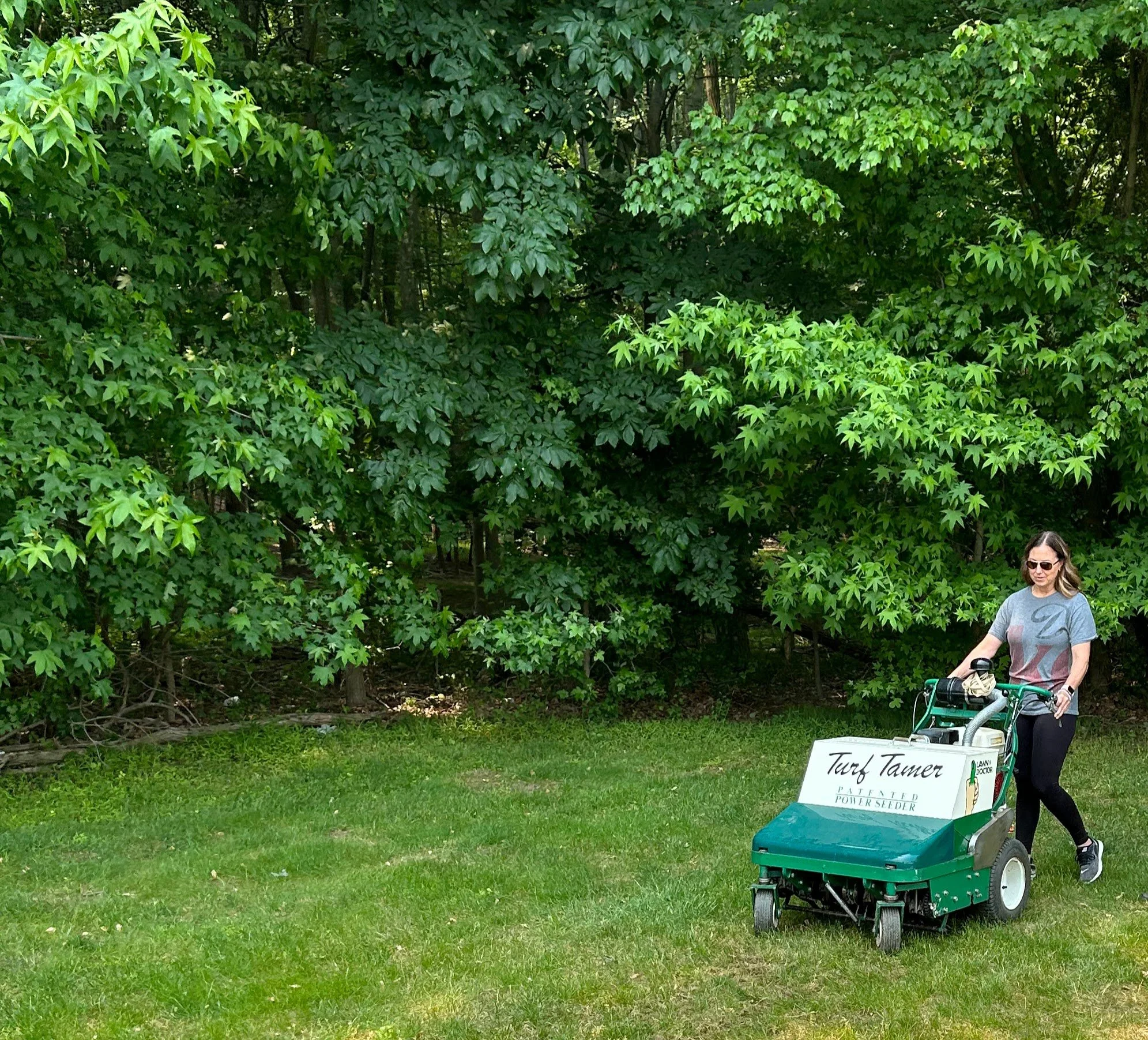
What is power seeding?
Power seeding, also called slit seeding, uses specialized equipment to cut shallow grooves into the soil and place seed directly into the ground, giving excellent seed-to-soil contact and better germination than traditional broadcast seeding.
Frequently Asked Questions
Is power seeding cheaper than sod?
Yes. Power seeding has a significantly lower upfront cost than sod, requires no sod removal or disposal, and is ideal for large areas or full lawn renovations.
Is power seeding safe for kids and pets?
Yes. Like all Lawn Doctor services, power seeding is family and pet-friendly.
How long does it take for power seeding to fill in?
Most lawns show initial germination in 7 to 21 days, visible thickening over several weeks, and full establishment over one growing season with consistent watering.