
When to Apply Pre-Emergent in Utah County and the Heber Valley
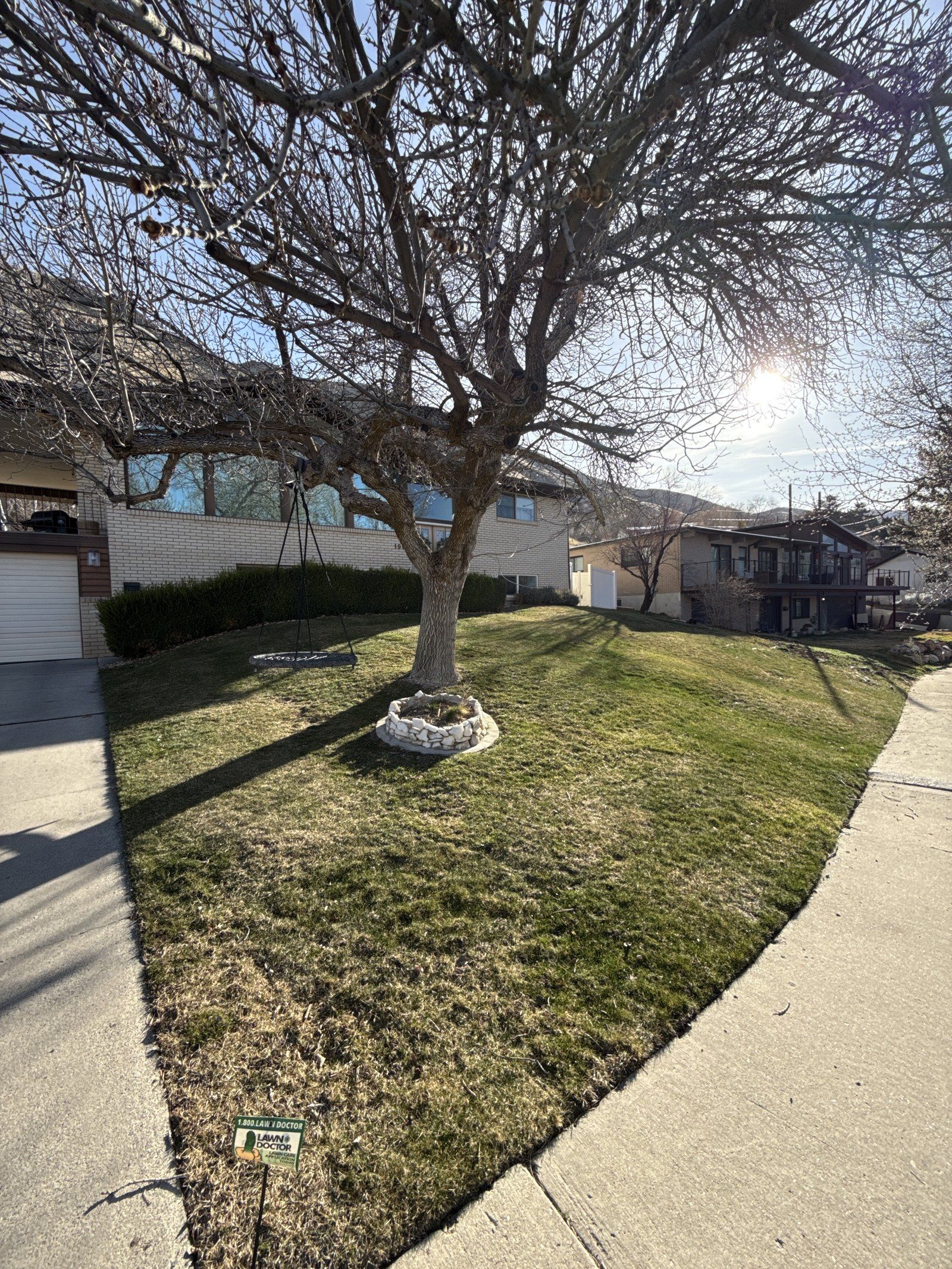
Crabgrass preventer is the one treatment where timing matters more than product. Here is the soil temperature that triggers it, the windows for the valley floor and Heber, and the four ways people waste an application.
Pre-emergent is the one lawn treatment where timing matters more than the product in the bag. It does not kill crabgrass. It creates a thin chemical barrier in the top layer of soil that stops crabgrass seed from surviving germination, so it has to be down and watered in before that seed wakes up. A week early is fine. Two weeks late is a season of crabgrass.
The trigger is soil temperature, not a date
Crabgrass seed germinates when soil temperature at about two inches deep holds near 55 degrees for several days in a row. Air temperature is a poor guide here, because soil warms slower and holds heat longer. That is why one March week of 70 degree afternoons does not start crabgrass, and why a cold, wet April can push germination back two weeks.
If you want a free indicator, watch the ornamentals. Forsythia finishing its yellow bloom and lilacs beginning to leaf out line up closely with soil hitting the mid 50s. When you see that in your neighborhood, the window is open and closing.
The windows here
- Valley floor, Provo through Santaquin. Mid March to mid April in a normal year. West side lawns in Provo, Orem and Spanish Fork warm first; bench lawns above about 5,000 feet run a week to ten days behind them.
- Heber Valley, Midway and Wallsburg. Early to late April. The valley sits roughly 1,000 feet above Provo, the ground thaws later, and crabgrass germinates close to a month after it does in Spanish Fork.
- Park City and Kamas. Late April into May, and in a heavy snow year later still. Applying on the valley schedule here means putting product on ground that is still frozen.
- Shaded and north-facing lawns. Later than the rest of the same yard. Sunny strips along a south-facing driveway or sidewalk are where crabgrass shows up first, every year.
Why one application is usually not enough
Pre-emergent breaks down in the soil. Most products hold a useful barrier for somewhere between six and twelve weeks depending on rate, water and heat. Crabgrass in Utah does not germinate all at once; it comes in waves from the first warm stretch through early summer, and the ground along hot concrete keeps producing new seedlings long after the lawn interior has stopped. One early application often runs out before the last wave.
That is why our program splits it: pre-emergent goes down on the first visit and again on the second, which extends the barrier through the full germination period and catches spurge and other summer annuals on the back end. Both rounds include fertilizer and broadleaf weed control on the same visit.
Four ways people waste an application
- Not watering it in. The barrier does not exist until the product moves off the granule and into the top half inch of soil. That takes about a half inch of water or rain within a few days. Dry granules sitting on the lawn in April are doing nothing, and a mower or a windy afternoon can move them off the lawn entirely.
- Overseeding at the same time. Pre-emergent does not know the difference between crabgrass seed and bluegrass seed. If you spread seed in spring, a standard pre-emergent will stop most of it from establishing. Pick one. This is the main reason we push aeration and overseeding into the late summer window instead.
- Dethatching or power raking after application. Pulling a rake through the top half inch of soil is pulling the barrier apart. Core aeration is far less disruptive and research has not found it to meaningfully hurt crabgrass control, but power raking after a pre-emergent application does.
- Expecting it to fix crabgrass already up. Once crabgrass has germinated, pre-emergent will not touch it. At that point it is a post-emergent problem, and in a hot July the honest answer is often to control what is there, keep the lawn thick, and get the timing right next spring.
The part that matters more than the chemistry
Crabgrass is an opportunist. It needs light at the soil surface and heat to get started, which is why it owns thin lawns, scalped lawns, park strips and the edges along driveways, and why it mostly leaves a dense lawn alone. Mowing at three to three and a half inches shades the soil enough to stop a large share of germination on its own. Watering deep and twice a week rather than shallow and daily keeps the surface drier than crabgrass likes. Pre-emergent handles what is left, and over a few seasons a thicker lawn does more of the work than the product does.
If you want us to handle the timing
We run the schedule off conditions, not a fixed calendar, and the routes are built so Heber and Park City get their first round weeks after Provo and Spanish Fork. The full 2027 schedule lists every visit and window, or you can get a price for your lawn with a free quote.
Need help with your lawn or home?
Utah County, Heber Valley, and Park City
Pick your city to see what we offer near you.
Related guides and services
Want help with this? Start here.
Aeration and overseedingLawn fertilization and weed controlLawn care and pest control in Heber CityLawn care and pest control in KamasReady for a greener lawn?
Call us or request a free quote. We make it easy.